The Outdoor Cushion Mistake: Storing It Without Letting It Dry
Outdoor cushion storage works better when fabric is fully dry first. Learn how to spot trapped moisture, air cushions safely and prevent stale smells.
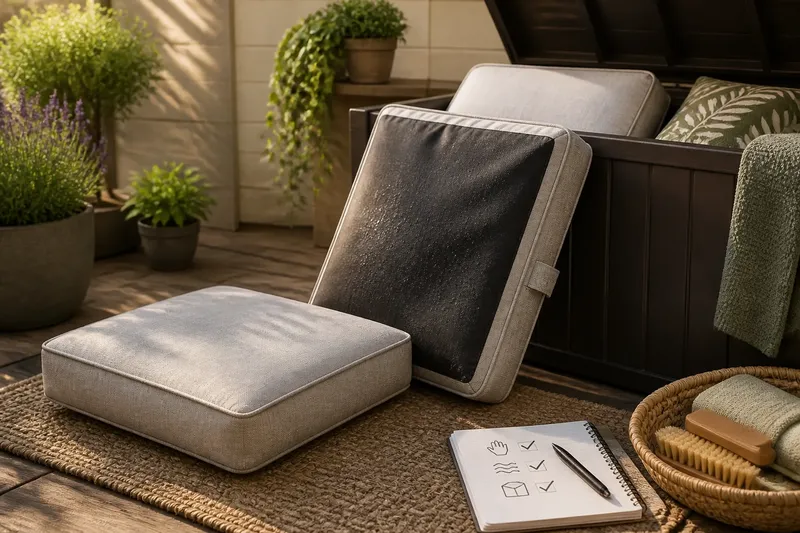
You lift the patio cushions after a shower, see that the covers feel almost dry, and tuck them into a storage box before heading indoors. A few days later, the box opens to a stale, damp smell. Outdoor cushion storage is not finished when the cushions are out of sight: moisture can remain inside the fabric and filling long after the surface feels dry.
The useful habit is simple: check, air, then store. That order helps prevent trapped dampness without turning ordinary cushion care into a complicated routine. It also helps you work out whether the smell comes from moisture, dirt or a cover that needs attention.
Why storage traps damp
A cushion can dry unevenly. The outer cover may feel dry while the seams, underside or filling remain cool and damp. Rain, dew, spilled drinks and humid air can all leave moisture behind. Thick cushions and tightly woven covers may take longer to air than a thin seat pad.
A closed bench, deck box or plastic bag limits airflow. If a cushion goes in damp, the moisture has nowhere useful to go. Fabric may develop a stale smell, and the filling can feel clammy when you retrieve it. These signs call for a pause and a fresh airing, not simply more fragrance.
Think of a cushion like a damp tea towel folded into a drawer: the outside may seem fine, but the trapped inner layers stay wet. The same principle applies even when the cushion is labelled for outdoor use. Weather-resistant materials can cope with outdoor conditions, but that does not mean they should be sealed away while wet.
Check before putting away
Start with a quick inspection rather than relying on appearance alone. Press a clean, dry hand against the seat, then check the underside and seams. Notice whether the fabric feels cool, clammy or heavier than it did when dry. Check around piping and covered zips, where water can linger.
- Feel both sides of the cover, especially the underside that rested on a chair.
- Press the centre gently to check whether the filling feels damp.
- Inspect seams, piping and corners for beads of water or darkened patches.
- Smell the fabric for a musty note before closing the storage lid.
- Check the storage space itself for dampness, condensation or stale odours.
If you find moisture, leave the cushion out. If it feels dry but smells stale, air it first and then decide whether cleaning is needed. A strong or persistent smell may point to dirt, a spill or mildew rather than dampness alone.
Air cushions in order
Take cushions out of the storage area and place them somewhere dry with moving air. A sheltered patio, open-sided porch or well-ventilated room can work. Avoid leaving them where fresh rain or heavy dew can reach them. If the weather is unsettled, a bright indoor area with an open window may be more suitable than an exposed garden chair.
Stand cushions on an edge or prop them apart so air can reach more of the surface. Turn them during the airing period, giving attention to the side that normally rests on the furniture. Separate removable covers from inserts only if the care label allows it; some fillings or covers need particular handling.
Do not put a damp cushion straight against a radiator or use a hot hairdryer. High heat can affect some fabrics, coatings, fillings or fastenings. Let ordinary airflow do the work, and give thicker cushions more time than thin pads. The point is not to meet a fixed timetable, but to confirm that the whole cushion feels dry and has no damp smell.
When drying does not help
If the cushion is dry but still smells unpleasant, look for a likely source. Food spills, sunscreen, pet marks and grime can cling to a cover even after the moisture has gone. Brush away loose dirt and clean the fabric only as its care instructions permit. Some covers can be machine-washed; others may need spot cleaning or professional care.
For visible mildew or a smell that returns after airing, avoid brushing spores into the air or mixing cleaning products. Follow the manufacturer’s directions for the cover and filling. If the material is delicate, the mark is extensive, or anyone in the household has a relevant health concern, seek advice from a suitable cleaning professional.
Say you bring in two seat cushions after a damp evening. One feels dry across its face but cool underneath, while the other has a sour smell around a seam. You leave both open in a sheltered, airy place, turn them so the undersides face out, and inspect them again later. The first may be ready once its filling feels dry; the second may need label-approved cleaning if the smell remains. That check helps you avoid treating every odour as the same problem.
Choose storage that breathes
Once the cushions are dry, use a storage place that stays dry and can be ventilated. A weather-resistant storage box can be useful, but a closed container is not a drying cabinet. If the box has a lid, open it from time to time when conditions are dry, and make sure the cushions are not packed so tightly that air cannot move between them.
Keep cushions off a damp floor and away from wet garden tools, watering cans or dripping plant pots. A clean shelf or dry raised surface can help keep them clear of moisture. Avoid wrapping them tightly in plastic for routine storage; an impermeable cover can hold damp air against the fabric.
Before the next spell of wet weather, check the storage space itself. If its interior smells musty or shows condensation, air and dry the space before putting cushions back. A fresh cushion placed in a damp box can pick up the same stale smell again.
Outdoor cushion storage questions?
How can I tell if a cushion is dry inside?
Feel the centre and underside as well as the outer cover, and check seams and corners. If the filling feels cool or clammy, or the fabric smells damp, leave it airing before storage.
Can I leave cushions outside overnight?
That depends on the weather and the materials, but dew can dampen fabric even without rain. If cushions are likely to be exposed, bring them under shelter and check them before closing them away.
Should I use a plastic bag for cushion storage?
Use a sealed plastic bag only if the cushion is fully dry and the manufacturer’s directions support that method. For regular storage, a dry, ventilated place is generally a better choice than wrapping fabric tightly.
What if the musty smell keeps returning?
Check the filling, seams and storage box for lingering dampness, then clean the cover only as directed. If the smell persists or mildew is visible, consult a suitable cleaning professional rather than masking it with fragrance.
A simple return routine
When cushions come in from the garden, pause before stacking them away. Check both sides, feel the filling, and give any damp pieces room to air. Store them only when they feel dry throughout and the storage area is dry too. That small change to outdoor cushion storage helps keep fabrics fresher and makes the next afternoon outside more comfortable.
If you are unsure how a particular cover or insert should be cleaned or dried, follow its care label or the manufacturer’s instructions. When cushions are ready, keep the storage lid open briefly during a dry spell so the space can air as well.