A Late-Summer Evening, Set Up for One Unhurried Meal
Plan a late-summer evening meal outdoors with comfortable seats, a clear serving surface and an easy route back indoors, without overloading a small space.
The last light is fading, the plates are ready, and someone has to make three trips between the kitchen and the patio. A little thought before a late-summer evening meal can keep the table clear, the seats comfortable and the return indoors straightforward.
1. Choose the meal’s footprint
Start with what you intend to serve, not with decorative extras. A shared bowl of pasta, bread and a jug need less surface space than several dishes meant to stay within reach. Decide what will arrive at the table and what can remain indoors until needed.
Use the smallest table that can hold the serving dishes and place settings without crowding elbows. If the outdoor table is narrow, set plates at each seat and bring larger dishes out one at a time. A side table can hold a jug or spare cutlery, but only if it does not make sitting down awkward.
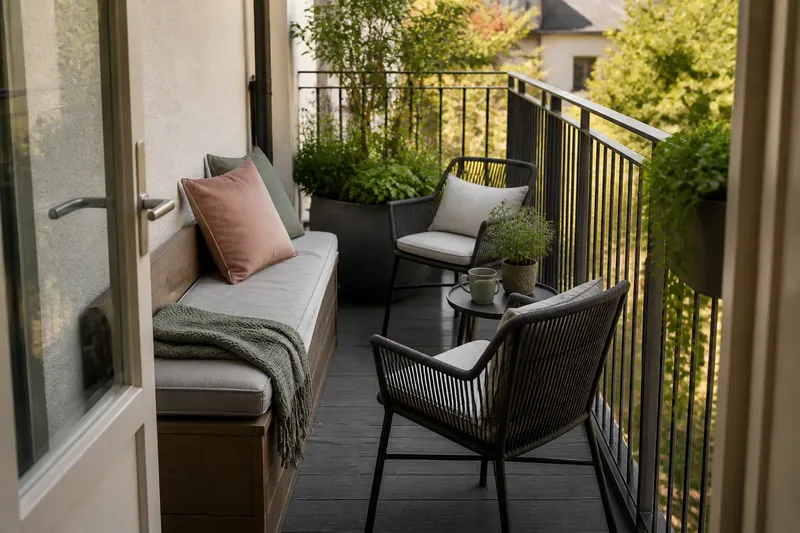
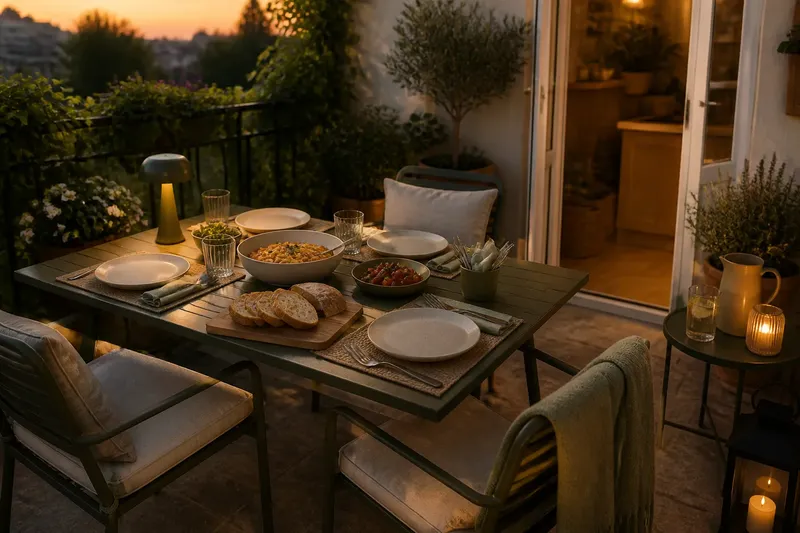
Imagine you are serving a simple supper of bread, tomatoes and a bowl of warm food on a compact balcony. Put the plates at the seats, reserve the table’s centre for the main bowl, and leave the jug on a nearby stable side table. The expected result is a usable surface where diners can reach what they need without shifting plates around.
2. Settle the seating
Choose chairs that let everyone sit with both feet supported and enough room to move in and out. A cushion can soften a hard seat, but it should not push the sitter forward or make the chair feel unstable. If your chairs have arms, check that they tuck under the table rather than blocking knees.
For a small group, angle seats slightly towards one another so conversation feels natural. Leave space behind each chair for someone to stand without scraping against a wall or planter. Treat the arrangement like a coat on a hook: it should sit neatly in its place, not spill into the way.
Think about the evening’s temperature as well as the daylight. A light layer draped over a chair is easier to reach than one stored in a bedroom. Bring cushions outside only when the weather is settled, and keep a basket or indoor spot ready if damp air or a shower threatens.
3. Clear the serving surface
Before carrying food out, remove plant pots, watering cans, tools and anything else that has taken over the table. Wipe the surface and check that it does not wobble. A placemat can help keep dishes steady and mark each place, but avoid piling on objects that compete with the meal.
Keep hot dishes on a trivet that suits the table material. Put cutlery and napkins in one small container rather than scattering them around the edge. Leave enough open space to set down a plate while serving; that modest patch of bare table often matters more than a centrepiece.
Use lighting that helps people see food and steps without shining directly into anyone’s eyes. A rechargeable table lamp or a sheltered lantern can provide a soft pool of light, provided it is designed for the setting and placed where it cannot be knocked over. Follow the maker’s instructions and any relevant local rules for outdoor equipment.
4. Plan the return indoors
Make the trip back to the kitchen easy before dinner begins. Choose a spot indoors for used plates, and decide where leftovers will go. A tray can carry cups and cutlery together, while a lidded container is useful for food that should not remain outside. Keep the doorway clear of shoes, bags and plant pots.
Set aside a small cloth for spills and a container for scraps. This keeps the clearing-up kit close without turning the table into a work station. If you have a compost caddy, bring it to the doorway only when needed, then return it promptly so it does not attract insects or take up dining space.
Check that the route is easy to use once it is dim. Move loose watering hoses and fold away anything that could catch a foot. Do not rely on a phone torch while carrying dishes; arrange steady lighting along the approach instead.
5. Keep the evening flexible
Late summer can shift from warm sunshine to cool air quickly. Have a simple alternative ready: a light blanket, an indoor place to finish the meal, or a way to bring the food inside without dismantling the whole setting. This is more useful than trying to make the outdoor arrangement elaborate enough for every possible change.
Keep the table’s most useful area open until everyone is seated. Then bring out extra food, a candle or a final drink only if there is room. The evening should not depend on every item being arranged at once; a little spare capacity makes serving and conversation less fussy.
What should you prepare?
How much table space do I need?
Allow room for each diner’s plate and cutlery, plus the dishes that must stay on the table. If the surface is tight, serve larger dishes in turns or use a stable side table for drinks.
What lighting works for a small patio?
Choose a steady, low-glare light that illuminates plates and the way indoors. Place it where it will not block a serving spot or be easily knocked over.
How do I handle a cool evening?
Keep a light layer within reach and have an indoor fallback ready. If the air turns damp, bring cushions inside rather than leaving them out overnight.
What should stay indoors?
Keep delicate linens, spare cushions and food that needs protection indoors until they are wanted. Check product labels and manufacturer instructions for outdoor items, and follow local rules where they apply.
A late-summer evening meal works best when the setup leaves room for ordinary interruptions: another serving, a cooler breeze or a plate that needs carrying in. Before guests sit down, take one last look from the doorway. If you can see where to serve, where to sit and where to put things afterwards, the space is ready for an unhurried meal.